Middle Tennessee gets two storm seasons, not one. Spring brings lines of severe thunderstorms and tornado warnings, fall can bring a second round, and every so often winter throws in an ice storm that brings down limbs and power lines across the region. The March 2020 tornado and the May 2010 flood are still fresh reminders of how fast things can change.
You can't control the weather, but storm electrical safety is mostly about decisions you make on a calm day. A little preparation protects your electronics and appliances, keeps a generator from becoming a hazard, and helps you know what to check when the sky clears.
Before the season: a short prep list
Pick a quiet weekend in late winter or late summer and work through these. None of them involve opening a panel or touching wiring.
- Find your main breaker and label it clearly so anyone in the house can shut off power in an emergency.
- Make sure the panel directory matches the circuits. Guesswork in the dark is no fun.
- Test smoke and carbon monoxide alarms and replace batteries in any battery-powered units.
- Charge power banks and keep flashlights where you can reach them without a phone light.
- Look up at the service drop from the pole to your house. Branches resting on or near it are worth calling your utility about.
- Walk the yard for dead limbs overhanging the roof, the meter or the service mast.
Surge protection: the layer most homes skip
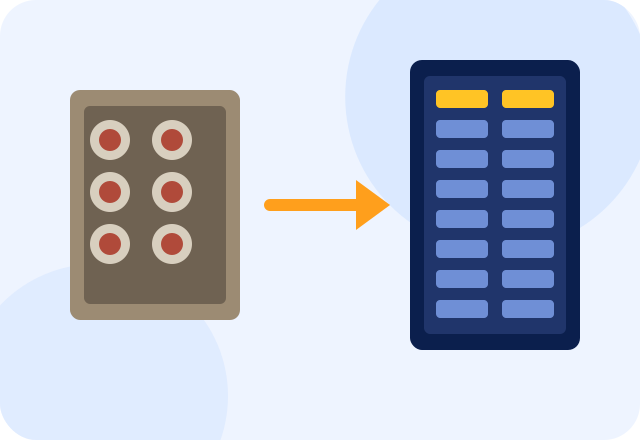
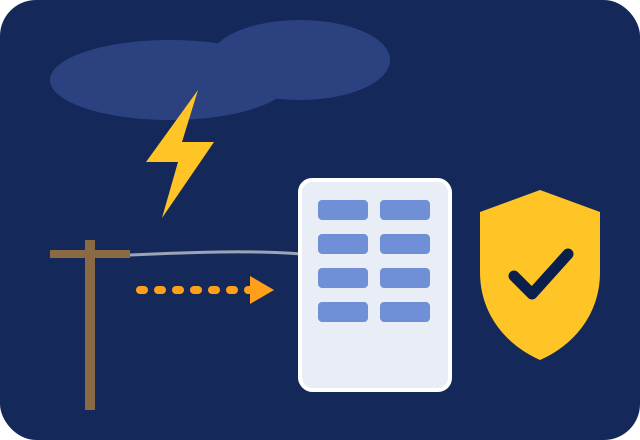
Lightning doesn't need to hit your house to cause damage. A strike nearby, or the power surge when the grid switches back on after an outage, can push a spike through your wiring and into anything plugged in. Modern appliances are full of circuit boards, from the HVAC system to the refrigerator and washer.
Plug-in surge strips help at the desk or entertainment center, but they only protect what's plugged into them. Whole house surge protection for storms is installed at or near the panel and helps limit surges before they travel through every branch circuit.
Two layers work together. A whole-home device at the panel plus quality point-of-use strips for sensitive electronics is the common recommendation. Neither makes a home lightning-proof, but together they reduce the risk of damage from everyday surges.
A device at the panel also depends on good grounding. If your home is older or you've had surge damage before, ask about surge protection and a check of the grounding and bonding at the same visit.
Generator safety you can't skip
Portable generators are common across the region, especially on rural properties where outages can last longer. They are also a leading source of carbon monoxide poisoning after storms. These portable generator safety tips are non-negotiable:
- Never run a generator indoors, in a garage (even with the door open), in a basement, crawlspace or on a covered porch.
- Keep it well away from the house, with the exhaust pointed away from doors, windows and vents.
- Never backfeed your home by plugging the generator into a dryer outlet or wall receptacle. It can energize utility lines and seriously injure line workers or neighbors.
- Use heavy-duty extension cords rated for the load, and don't run them under rugs.
- Let the generator cool before refueling, and store fuel away from the house.
- Have working CO alarms on every level of the home.
If you want to power household circuits directly, the safe way is a generator transfer switch or interlock installed by a licensed electrician. It keeps your home isolated from the grid while the generator runs.
During the storm
Unplug what matters
When a severe thunderstorm warning is issued, unplug computers, TVs and chargers you don't need. It takes a minute and removes them from the surge path.
Stay off corded phones and out of the shower
Lightning can travel through plumbing and wiring. Wait until the storm passes.
Shelter first, electronics second
In a tornado warning, get to your safe room or an interior room on the ground floor. No device is worth the delay.
Leave the panel alone if water is present
If water is coming into a basement or garage where the panel sits, do not walk through it to reach the breaker.

After the storm: flood water and damage checks
Once it's safe outside, look before you touch. Downed lines should always be treated as live. Stay far away and report them to your utility or 911.
Flood water changes everything. Any outlet, panel, appliance or wiring that was underwater needs to be checked by a licensed electrician before power is restored to it. Water leaves behind mud and corrosion that can cause shocks or fires later, even after things look dry.
Signs of electrical damage after a storm include a bent or pulled-away service mast, a damaged meter base, lights that are brighter or dimmer than normal, a burning smell, or some rooms dead while others work. The meter base and mast are your responsibility to repair even though the utility owns the meter, so a meter base and service mast repair may be needed before the utility can reconnect. The storm and lightning damage guide covers what to look for in more detail.
Key takeaways
- Prepare on calm days: label the main breaker, test alarms and trim limbs near the service drop.
- Whole-home surge protection at the panel plus point-of-use strips gives two layers of defense.
- Never run a generator indoors or in a garage, and never backfeed through an outlet.
- Anything that sat in flood water needs a professional check before power goes back on.
Frequently asked questions
Late winter, before the spring storm season, and late summer, before fall storms, are good checkpoints. Doing it on a calm day means you can find the main breaker, test alarms and call about overhanging limbs without pressure.
No device makes a home immune to a direct strike. A whole-home surge protector helps limit the far more common surges from nearby strikes and grid switching, and it works well alongside good grounding and point-of-use strips.
It sends power backward through your panel and out to the utility lines, which can shock line workers and neighbors. It can also overload your wiring and start a fire. A transfer switch or interlock is the safe alternative.
Well away from the home, outdoors in the open, with exhaust aimed away from doors, windows and vents. Follow the distance in the generator's manual and keep working CO alarms inside, since fumes can drift in.
No. Anything that was underwater, including the panel, outlets or appliances, should be checked by a licensed electrician first. Water and mud leave corrosion that can cause shocks or fires once power returns.
The utility typically owns the meter, but the meter base and service mast attached to your house are usually the homeowner's responsibility. A licensed electrician repairs them, and the utility then reconnects service once the repair passes any required inspection.