
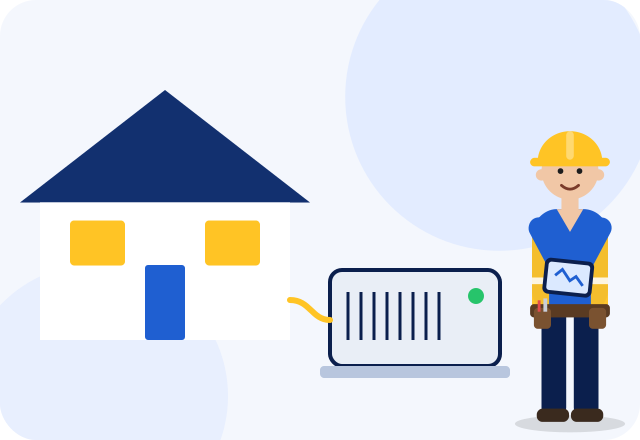
Whole house generator installation involves electrical, gas and site work, plus permits and inspections. For homeowners in Murfreesboro and the surrounding counties, a call here connects you with a local electrician who can size the system and coordinate the pieces.
The parts of a standby generator system
The generator itself is set on a pad at a code-compliant distance from windows, doors and vents. It connects to your fuel supply, either a natural gas line from the meter or a propane tank sized for the run time you want. Gas work is typically done by a licensed plumber or gas fitter, or by your gas provider, and the electrician coordinates the timing.
On the electrical side, the automatic transfer switch is the key part. It monitors utility power, signals the generator to start, and keeps the generator isolated from the utility lines so power never flows backward. Some systems back up the entire service; others back up a selected group of circuits. The transfer switch page covers how these switches differ.
Households that tend to want standby power
- Homes with a well pump, where an outage also means no water
- Anyone relying on powered medical equipment at home
- Homes with a sump pump or basement that floods during heavy rain
- Rural properties with long service drops that lose power often
- Households that work from home and can't afford long interruptions
Situations that push people toward a permanent generator
- Repeated multi-hour outages after storms or ice
- Frozen pipes or spoiled food from a past extended outage
- Tired of running a portable generator and extension cords
- A heat pump or AC you can't run on a portable unit
- Concerns about carbon monoxide from portable generators near the house
How a standby install comes together
The process begins with a load calculation. The electrician lists what you want running during an outage, accounts for motor starting loads from AC compressors and well pumps, and recommends a generator size and transfer switch type. Then comes the site plan: pad location, clearances, the gas line route and the wire run to the transfer switch. Permits are pulled for electrical and gas work, installation is scheduled, and inspections follow. Some systems need a panel upgrade or rearranged circuits first.
After startup, the generator is tested under load and the exercise schedule is set so it runs briefly on its own to stay ready. Factors that shape the project cost are covered in the whole-home generator cost guide.
- Load calculation, including motor starting current
- Transfer switch type and rating: whole service or selected circuits
- Generator placement clearances from openings and property lines
- Fuel supply capacity for natural gas or the propane tank size
- Grounding and bonding at the generator and transfer switch
- Permit requirements and inspection scheduling

Safety first. A standby generator produces carbon monoxide just like a portable one, which is why placement rules matter. Keep the area around the unit clear of shrubs, stored items and snow drifts, and keep working CO alarms inside the home. Never try to connect a generator to your house wiring without a transfer switch; backfeed can injure line workers and damage equipment. Gas connections should be made and leak-tested by someone qualified for gas work.
How it usually works
Call and describe your needs
Call and explain what you want powered during an outage. You'll be connected with a local electrician.
Site visit and sizing
A load calculation, site check and fuel assessment determine generator size and transfer switch type.
Permits and installation
Permits are pulled, the pad is set, the transfer switch is wired and gas work is coordinated.
Inspection and startup
After inspection, the system is started, tested under load and you're shown how it operates.
In Murfreesboro and Middle Tennessee homes
Middle Tennessee sees spring tornado warnings, summer thunderstorms and the occasional ice storm that can bring down lines for days. Rural homes in places like Eagleville or the acreage properties around Rutherford County often have well pumps and long service drops, so an outage hits harder there. Homes in town may have natural gas available at the street, while many rural properties rely on propane, and that choice shapes the whole design.
Related electrical problems
Seeing one of these at home? Each guide explains likely causes and what's safe to check before you call about whole-home generator installation.