
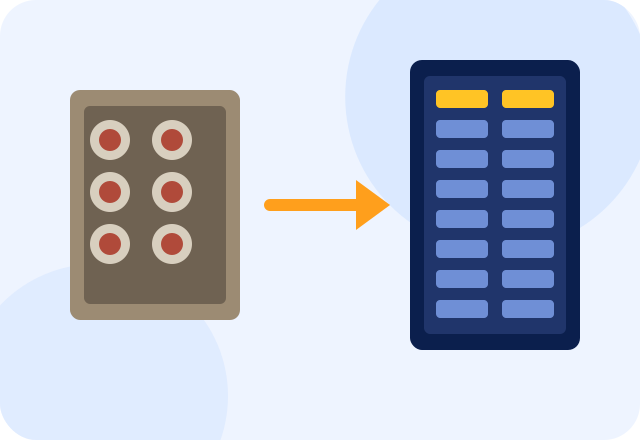
Fuse box replacement means removing the fuse panel and installing a breaker panel, usually with a service upgrade. If you're buying an older home, your insurer may ask about the fuse box before writing a policy, and a home inspector will almost certainly note it.
Moving from fuses to a breaker panel
The job resembles a panel replacement, with a few extra wrinkles. Fuse-era homes often have 60 amp service, so the new panel is typically paired with larger service entrance conductors and a new meter base. Grounding in these houses is often minimal, sometimes just a clamp on a water pipe, so the electrician will bring the grounding electrode system up to current code.
Branch circuits get a close look too. Old fuse boxes sometimes feed cloth-insulated wiring or even knob and tube wiring, and connecting that to a new panel doesn't make it new. The electrician will tell you which circuits are in reasonable shape and which should be replaced when the budget allows.
Reasons homeowners finally make the switch
- An insurance company won't cover the home until the fuse box is replaced.
- Fuses blow often and you keep a box of spares on hand.
- You want to add central air, an electric dryer or an electric range.
- You're buying or selling an older home and the inspection flagged it.
- You'd like GFCI and AFCI protection that a fuse panel can't provide.
Red flags with an old fuse box
- 30 amp fuses on circuits that should have 15 or 20 amp fuses.
- Scorch marks, melted fuse holders or a hot fuse box cover.
- Pennies, foil or anything else jammed behind a fuse.
- Extension cords and power strips everywhere because there aren't enough circuits.
- Lights that dim sharply when the AC or a microwave kicks on.
What to expect on changeover day
After a load calculation and a permit, the utility disconnects power while the electrician removes the fuse panel and installs the new breaker panel and any new service equipment. Each circuit is identified, fitted with the correct size breaker and labeled. Circuits with damaged insulation or shared neutrals are flagged. Expect power to be off for most of a day, longer if the meter base or mast is being replaced. The utility restores power once the inspection passes.
- Service size and whether it needs to increase
- Condition of the meter base, mast and service entrance cable
- Grounding electrodes and bonding to metal water piping
- Insulation condition on every branch circuit landed in the new panel
- Signs that oversized fuses let wiring overheat in the past

Safety first. Never replace a blown fuse with a larger one, and never bridge a fuse socket with anything metal. Keep a few correct-size spares so nobody is tempted. When changing a plug fuse, stand on a dry surface, turn off the main, and touch only the glass body of the fuse. If the fuse box feels hot or smells like burning plastic, stop using that circuit and call.
How it usually works
Call to get connected
Call to connect with a local electrician who handles fuse box to breaker panel changeovers in your area.
Assessment
The electrician checks the service, grounding and existing wiring and explains what should change along with the panel.
Permit and scheduling
A permit is pulled and the utility disconnect is scheduled for install day.
Changeover and sign-off
The new panel is installed and inspected, then the utility restores power.
In Murfreesboro and Middle Tennessee homes
Most fuse boxes left in the region sit in older houses near downtown Murfreesboro and in the older parts of towns across Middle Tennessee. Many of those homes were updated in pieces over the years, so it's common to find a newer circuit or two mixed in with original wiring. That patchwork is why the assessment matters. Rural farmhouses around Rutherford County sometimes still have fuse panels feeding a well pump or outbuilding, which is worth planning into the job. If you're weighing a full rewire along with the panel, signs a home needs rewiring is a useful read.
Related electrical problems
Seeing one of these at home? Each guide explains likely causes and what's safe to check before you call about fuse box replacement.